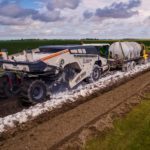

LIME KILN DUST IN SOIL MODIFICATION, STABILIZATION, AND FDR

What is Lime Kiln Dust (LKD)?

Lime Kiln Dust, a.k.a LKD, is a byproduct created when manufacturing Quicklime. When limestone is naturally heated, it produces gas with dust. The dust that is screened out is called Lime Kiln Dust.  LKD, has little beneficial use, and is mostly disposed of into landfills. The site work industry uses LKD as a stabilizing agent to dry poor soils.
LKD in Modification, Stabilization and FDR

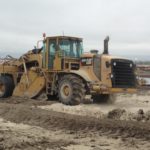
Soil Modification: Blending LKD into wet fill, often referred to as “Dry Down” can keep projects on time and on budget.  Dry Down is one of the most common uses for LKD.  It is very good at removing moisture from fill materials, so compaction can be achieved faster allowing for another lift of fill to be placed.

Lime Kiln Dust

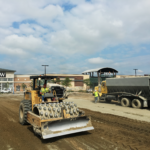
Soil Stabilization: Lime kiln dust for soil stabilization can stabilize building pad or parking lot sub-grades when existing soils are mostly comprised of clay like materials.  The increase in strength can be used to offset the thickness of aggregate base or surface (slab or pavement) needed to meet the engineers structural design.  This offset can provide big value.  See our NIMC case study to learn more. Using quicklime for soil stabilization also can help reduce the plasticity of the soil and make it easier to work.

Lime Kild Dust

Full Depth Reclamation: LKD can be used as an additive in combination with bituminous stabilizing agents to increase strength when repairing reclaimed materials with higher clay content.  Click HERE to learn more.

The Difference Between LKD & Quicklime

Although they come from the same general source, lime kiln dust and quicklime have different chemical compositions. Comprised mainly of calcium carbonate and magnesium carbonate, LKD has a higher proportion of unreacted minerals and less available calcium oxide. This is because it is produced when limestone is heated at relatively lower temperatures. On the other hand, quicklime is created when limestone is heated at temperatures above 900 degrees Celsius. It is highly reactive, interacting with water to generate heat and calcium hydroxide. This makes it useful in a wide range of industrial applications.

Since quicklime has more available calcium oxide you can use less of it to modify the same square footage of your project. In most cases, quicklime can be used at half the application rate of LKD.

CONTACT ROCK SOLID TODAY

Using LKD and quicklime for soil stabilization can help you achieve long-lasting, superior results. Each can be used in similar soil types such as clay, fatty clay, silty clays, etc. and it is very rare that one product would work better than the other in the same soil conditions.

Rock Solid Stabilization & Reclamation has the experience and expertise in using these additives to ensure your project goes as smoothly as possible. When you choose to work with us, you’ll gain a true partner who works closely with you to deliver a successful project each time. If you’re ready to learn more about our full capabilities, reach out and speak with one of our helpful representatives today.

JOIN OUR ELIST

Get the latest news and educational articles delivered right to your inbox. Join the Rock Solid elist today!

Name*

Have Questions?

Written By:

Eric.MikeBlog