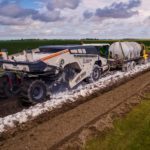

Benefits of Fly Ash in Soil Modification, Soil Stabilization, and Full Depth Reclamation

What is Fly Ash?

Fly ash is a byproduct from burning coal which makes steam to generate electricity.  When burning coal, combustion particles rise out of the combustion chamber with flue gasses. They are captured in filters to prevent them from reaching the atmosphere and collected for disposal or beneficial reuse. These particles are called fly ash.

There are two types of fly ash, Class C and Class F. Class C is self-cementing fly ash and is used in the production of concrete as a substitute for Portland Cement, and as a chemical stabilizing & modifying agent to dry and/or strengthen poor soils. Class F has very little self-cementing properties, but can be combined with additives such as quicklime, hydrated lime, or cement (portland or hydraulic) to create cementitious compounds for the same purposes.
How Fly Ash Improves Soil Properties

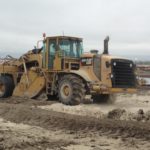
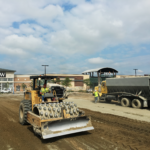
When mixed with soil and other additives, fly ash enhances the ground’s physical properties. For example, it adds shear and compressive strength that helps hold the soil in place even when the roadway on top of it is subjected to extreme forces. This also provides the earth with greater capacity for bearing heavy loads. Fly ash also serves to reduce soil plasticity and shrink-swell potential, which helps prevent sinking or buckling that can lead to damaged pavement. The addition of fly ash to soil also serves to prevent it from absorbing moisture that can lead to instability.

This is why the use of this additive is often recommended for projects in areas with expansive or clay-heavy soils. The process is employed most frequently when building subgrades for roads, parking lots, industrial pads, and embankments where strength and stability are essential.

Rock Solid’s Fly Ash Stabilization Process

Rock Solid uses a proven method for fly ash stabilization that provides optimal results. We begin with extensive soil testing to determine its properties, which is used to determine the proportions of fly ash and water needed. This is also when we determine whether any more additives will be required. Then we get to work mixing the additives into the soil and compacting the earth to ensure the best performance from the resulting subgrade. After the curing process is completed, we conduct quality control tests to make sure our work has achieved the desired results and meets regulatory compliance standards.

Fly Ash in Modification, Stabilization and FDR

The properties of fly ash make it a popular choice for use in soil modification and stabilization techniques:

Soil Modification: Given its cementitious properties, fly ash can dry down wet soils and increase the strength of each fill layer. It works best in sandy/silty soils but can be very effective in lean clays as well.

Lime Kiln Dust

Soil & Base Stabilization: Using fly ash in soil stabilization applications to strengthen the top 8”-14” of subgrade can decrease the thickness of aggregate base and/or pavement (asphalt or concrete) needed to achieve the structural design strength of the overall pavement section. Again, it works best in sandy, silty soils, but is also a great option to stabilize existing aggregate base when performing parking lot repairs or upgrades.

Lime Kild Dust

Full Depth Reclamation: Depending on the existing make-up of the current pavement & aggregate base, fly ash can be used by itself, or in combination with other additives, to rehabilitate entire pavement sections in place.

Fly ash yields less strength gain than Portland Cement. Typically, you need to use twice as much product to achieve similar results when compared to cement.  However, if a fly ash source is within proximity of a project, utilizing it could be a better value and is worth comparing.

JOIN OUR ELIST

Get the latest news and educational articles delivered right to your inbox. Join the Rock Solid elist today!

Name*

Have Questions?

Written By:

Mike.EricBlog