

Mixing aggregate materials and/or granular soils with carefully calculated amounts of portland cement and water that hardens after compaction to form a highly durable and resistant structural base to stand alone or support thin surface paving methods.

Typically less cost than concrete pavement or HMA

More durable than aggregate, ideal for heavy equipment traffic in industrial storage settings
Future maintenance costs significantly reduced
- Base Stabilization is an ideal solution for outdoor storage lots, parking lots, or industrial aggregate type yards
- More durable than aggregate surface, and can withstand heavy truck and equipment traffic with less dust
- Greatly reduces pothole and grading maintenance
Ideally suited for industrial applications, Base Stabilization typically costs less than concrete pavement or asphalt, and can support surface treatments such as chip seal, cape seal, various thin overlay systems, or traditional hot mix asphalt.
How It Works
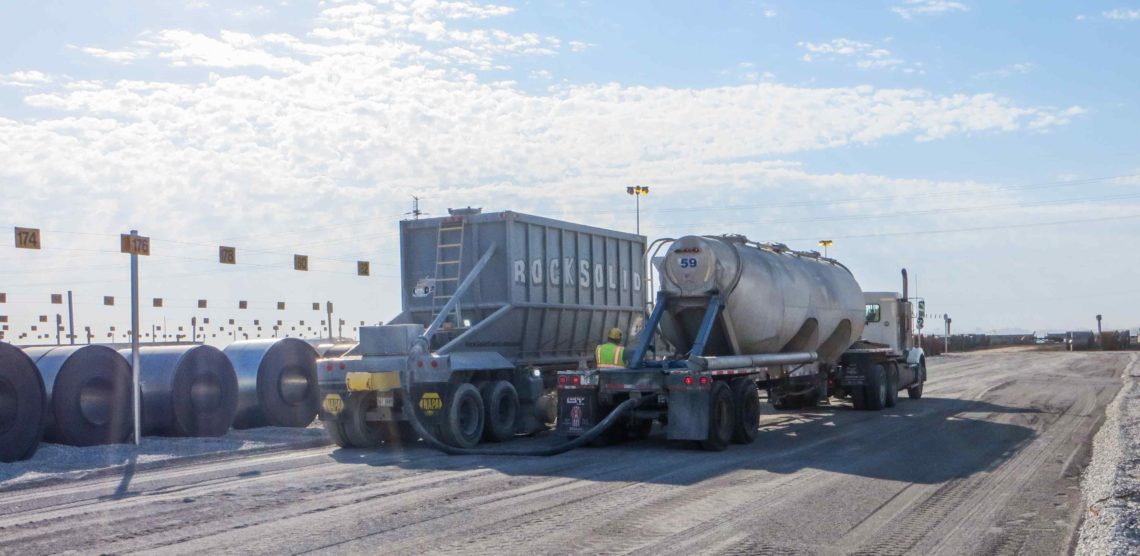
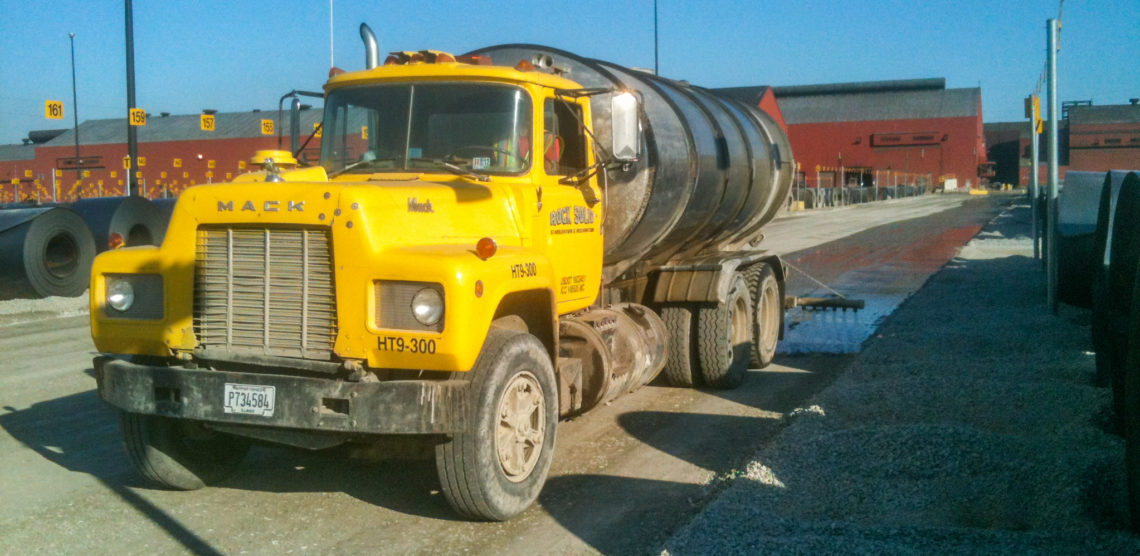
A cement-treated base (CTB) typically is created by combining aggregate with Portland cement. Other agents commonly used for base stabilization include fly ash, liquid chloride, foamed asphalt cement, emulsion, and lime. This CTB road base effectively creates a stronger foundation. This is because it helps bridge wet subgrade soil. Poor subgrade soils can be forced up into the aggregate surface by heavy traffic loads with untreated aggregate base. Utilizing a cement-treated road base is a popular choice for many property owners and road managers because it is less expensive over the lifespan of the entire pavement cross-section, provides greater stability, and has a relatively low impact on the environment. Among the many ecological benefits this road base stabilization technique provides are reduced material consumption, lower energy usage, and less disruption to natural habitats during construction.
Why Work With Rock Solid?
Since 2007, we have been committed to providing our customers with the most effective and innovative solutions for their soil modification and stabilization needs. We’re proud to serve projects across the country the expertise and equipment necessary to deliver a solid foundation for their paving work. When you call upon us to create a cement-stabilized base to support your pavement, rest assured that our crews will fulfill your expectations and put you in the best position for a durable, cost-effective, and ecologically responsible result. With a cement-stabilized base for your roadwork, your project can benefit from extended pavement lifespan, less downtime for repairs, and better performance under heavy traffic loads. Our experts can provide you with an extensive geotechnical analysis to help you determine the best base stabilization method for your project’s traffic loads, climate, and lifecycle.
If you want to learn more about our full range of base stabilization services and how they can help you, get in touch with us today and talk with one of our knowledgeable representatives.



Frequently Asked Questions
Base stabilization refers to the process of using specialized equipment to improve the strength and durability of existing soil or aggregate layers. It typically involves adding cement, lime, or fly ash directly into the soil to give it more load-bearing capacity, reduce its susceptibility to moisture, and increase its overall stability.
One of the leading causes of pavement failure is a weak or unstable base. Base stabilization seeks to ensure a stronger foundation before the asphalt or concrete is laid down, which in turn reduces long-term maintenance costs, minimizes the need for repairs, and extends the service life of the road.
Some of the most common stabilizing agents used in base stabilization include cement, fly ash, lime, and other proprietary chemical agents. The right materials for the job depend on soil type, moisture content, and the requirements of the project. Rock Solid Stabilization & Reclamation, Inc., evaluates the site conditions to ensure we use the right material blend to achieve lasting results.
Compared to a full-depth removal and replacement , base stabilization tends to be faster and more cost-effective. Rather than removing and replacing the entire base layer, base stabilization reuses the soil already in place and strengthens it with additives. This means reduces trucking, disposal costs, and construction time without compromising on the stability of the foundation.
Yes, this process can improve the performance of soil under wet conditions because it reduces the plasticity of the soil as well as its susceptibility to water. When treated in this manner, soil becomes less likely to shrink, swell, or weaken when exposed to moisture.
This process is used on a wide range of project types, including:
- • Highways and local roads
- • Parking lots and industrial yards
- • Airports and runways
- • Building pads and large commercial sites
- • Temporary haul roads for construction or energy projects
Essentially, any project that requires a strong, durable foundation can take advantage of base stabilization.
Because the existing soil is reused instead of removing it, most of these projects move relatively quickly, depending on the project size and site conditions.
Yes, because it reuses the soils already in place. This means less need for trucking that contributes emissions to the atmosphere and consumes fuel.
Rock Solid Stabilization’s team can review the soil characteristics, project goals, and traffic patterns of your site to help you determine if base stabilization is right for you. Getting in touch with us early in the project can help you ensure the right approach is selected.